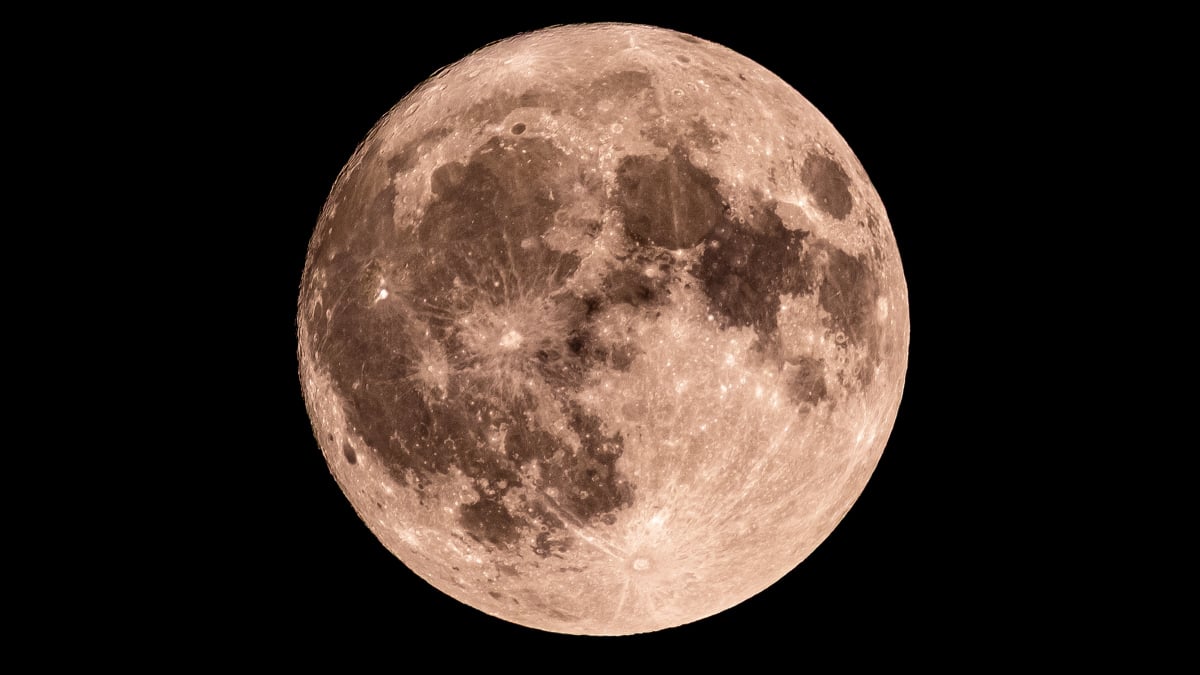
The Moon is getting brighter with each passing night. Its illuminated side is gradually growing on the right side (left, if you’re in the Southern Hemisphere) as it moves through the Waxing Crescent phase of its lunar cycle.
What is today’s Moon phase?
As of Wednesday, Aug. 19, NASA’s Daily Moon Guide tracker tells us the Moon phase is in Waxing Crescent phase, with 42% of its surface visible.
Without any visual aids, tonight you can see the Mares Crisium, Tranquillitatis and Fecunditatis. With binoculars you’ll also be able to see the Endymion Crater, Posidonus Crater, and the Mare Nectaris. A telescope will also help you spot the Apollo 17 and 16 landing spots, as well as the Rupes Altai.
When is the next Full Moon?
The next Full Moon will take place on August 28.
What are Moon phases?
The Moon goes through a series of phases that cause its appearance to change as seen from Earth. As the Moon orbits Earth, it goes through a lunar cycle that takes about 29.5 days to complete, according to NASA. The positions of the Sun, Earth, and Moon determine how much of the Moon’s illuminated side is visible from Earth, creating its different phases. Throughout the cycle, the Moon changes from a thin crescent to a half Moon, then a Full Moon, before repeating the cycle once more.
The eight phases are:
Mashable Light Speed
New Moon – The Moon is between Earth and the sun, so the side we see is dark (in other words, it’s invisible to the eye).
Waxing Crescent – A small sliver of light appears on the right side (Northern Hemisphere).
First Quarter – Half of the Moon is lit on the right side. It looks like a half-Moon.
Waxing Gibbous – More than half is lit up, but it’s not quite full yet.
Full Moon – The whole face of the Moon is illuminated and fully visible.
Waning Gibbous – The Moon starts losing light on the right side. (Northern Hemisphere)
Third Quarter (or Last Quarter) – Another half-Moon, but now the left side is lit.
Waning Crescent – A thin sliver of light remains on the left side before going dark again.
